Wolston is a large village in Warwickshire some 5 miles to the East of Rugby.
The War Memorial takes the form of a stone cross on the Green in Main Street Wolston recording those who laid down their lives in the Great War 1914 – 1918 and the Second World War and later conflicts.
Those who laid down their lives in the Great War 1914 - 1918 and recorded on the War Memorial in Wolston
David William Anderson Captain 6th Battalion London Regiment (City of London Rifles). Military Cross & Bar. Killed in Action 8th August 1918 aged 28 years. Buried Villers-Bretonneux Military Cemetery, Fouilloy, Somme. Captain Anderson was awarded, in addition to the Military Cross, the British War and Victory Medals, he having landed in France on the 26th January 1917.
John Henry Atkins No. 16382 Sergeant 1st Battalion the Duke of Cornwall's Light Infantry, died 25th May 1919, the cause of death being certified as Valvular disease of the heart, an Army medical authority having certified that the Heart Disease had been aggravated 100% by War Service. He is buried on the west side of London Road Cemetery, Coalville, Leicestershire. Son of Thomas and Eliza Atkins of School Road, Wolston. His brother Walter was killed in action on the w25th September 1915. Sergeant Atkins was awarded the 1914/1915 Star, the British War and Victory Medals he having landed in France on the 22nd September 1915.
Walter Atkins Acting Sergeant No 9717 1st Battalion Royal Welch Fusiliers. Killed in action 25th September 1915 aged 27 years. Commemorated on the Loos Memorial in Dud Corner Cemetery, Pas-de-Calais. Born Wolston, enlisted Coventry. Son of late Thomas and Eliza Atkins and brother of John Atkins. Walter Atkins landed in France on the 11th August 1914 serving with the 2nd Battalion Royal Welch Fusiliers and was seriously wounded in early 1915 and on his recovery and return to France, was transferred to the 1st Battalion. Sergeant Atkins was awarded the 1914 Star, the British War and Victory Medals.
William Barker Private No 30065 10th Battalion Royal Warwickshire Regiment. Died of wounds 15th December 1917. Buried in Orchard Dump Cemetery, Arleux-en-Gohelle, Pas-de-Calais. Born Wolston, enlisted Coventry, residence Wolston. Privater Barker was awarded the British War and Victory Medals.
Arthur Bunney Private No 2667112 1/7th Battalion Royal Warwickshire Regiment. Died of wounds 21st April 1917. Buried in Templeux-le-Guerard British Cemetery, Somme. Enlisted Leamington Spa, residence Wolston. Son of Mrs C Clarke 82 Princess Street Foleshill Coventry. Private Bunney was awarded the British War and Victory Medals.
Roland Bertie Butlin Rifleman No R/1150 11th Battalion King’s Royal Rifle Corps. Killed in action 10th July 1916 aged 21 years. Buried in Potijze Burial Ground, Ypres, West Flanders. Born Coventry, enlisted Rugby, residence Coventry. Son of Jesse and Agnes Butlin of Warwick Street, Wolston, Coventry. Rifleman Butlin was awarded the 1914/15 Star and the British War and Victory Medals, he having landed in France on the 21st July 1915.
Ernest Chambers Gunner No 11019 Royal Horse Artillery and Royal Field Artillery. In early September 1915 Gunner Chambers was badly wounded in the abdomen and was evacuated from the Gallipoli Peninsula on HMHS Karapara and died on board that hospital ship on the 7th October 1915 aged 19 years. He was buried at sea. Commemorated on the Helles Memorial , Cape Helles, Gallipoli. Born and enlisted Coventry. Son of Ernest and Kate Chambers of Rookery Cottages, Church Lawford, Rugby. Ernest Chambers was awarded the 1914/15 Star and the British War and Victory Medals, having landed in Egypt on the 19th July 1915.
Joseph James Clarke Private No 19561 1st Battalion Coldstream Guards. Killed in action 22nd August 1918 aged 20 years. Commemorated on the Vis-en-Artois Memorial, Haucourt, Pas-de-Calais. Born Wolston, enlisted Rugby, residence Wolston. Son of Mrs Esther Clarke Priory Row Wolston Coventry. Private Clarke was awarded the British War and Victory Medals.
William Robert Clarke Private No 33175 2/4th Battalion Oxfordshire and Buckinghamshire Light Infantry (formerly No 19634 Royal Warwickshire Regiment). Killed in action 21st March 1918 aged 20 years. Commemorated on the Pozieres Memorial, Ovillers-La-Boiselle, Somme. Born Wolston, enlisted Wolston, residence Bretford. Private Clarke was awarded the British War and Victory Medals.
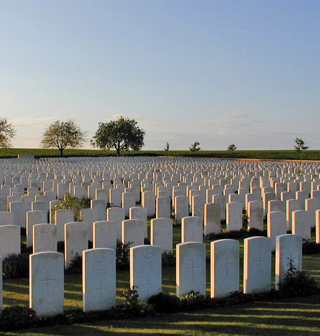
Wilfred Bernard Conway Private No 25070 2/5th Battalion Duke of Wellington’s (West Riding Regiment). Killed in action 20th October 1918 aged 20 years. Buried in Quievy Communal Cemetery Extension, Nord. Quievy is a village about 13 kilometres East of Cambrai and 4 kilometres North of the N43, the main road from Cambrai to Le Cateau. The cemetery was made by the 62nd (West Riding) Division after the capture of the village in October 1918 and records 89 U.K., 16 French and 99 German burials.
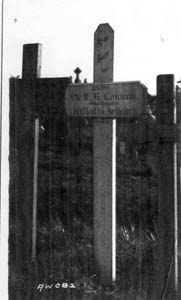
Original Wooden Cross in Quievy Communal Cemetery Extension.
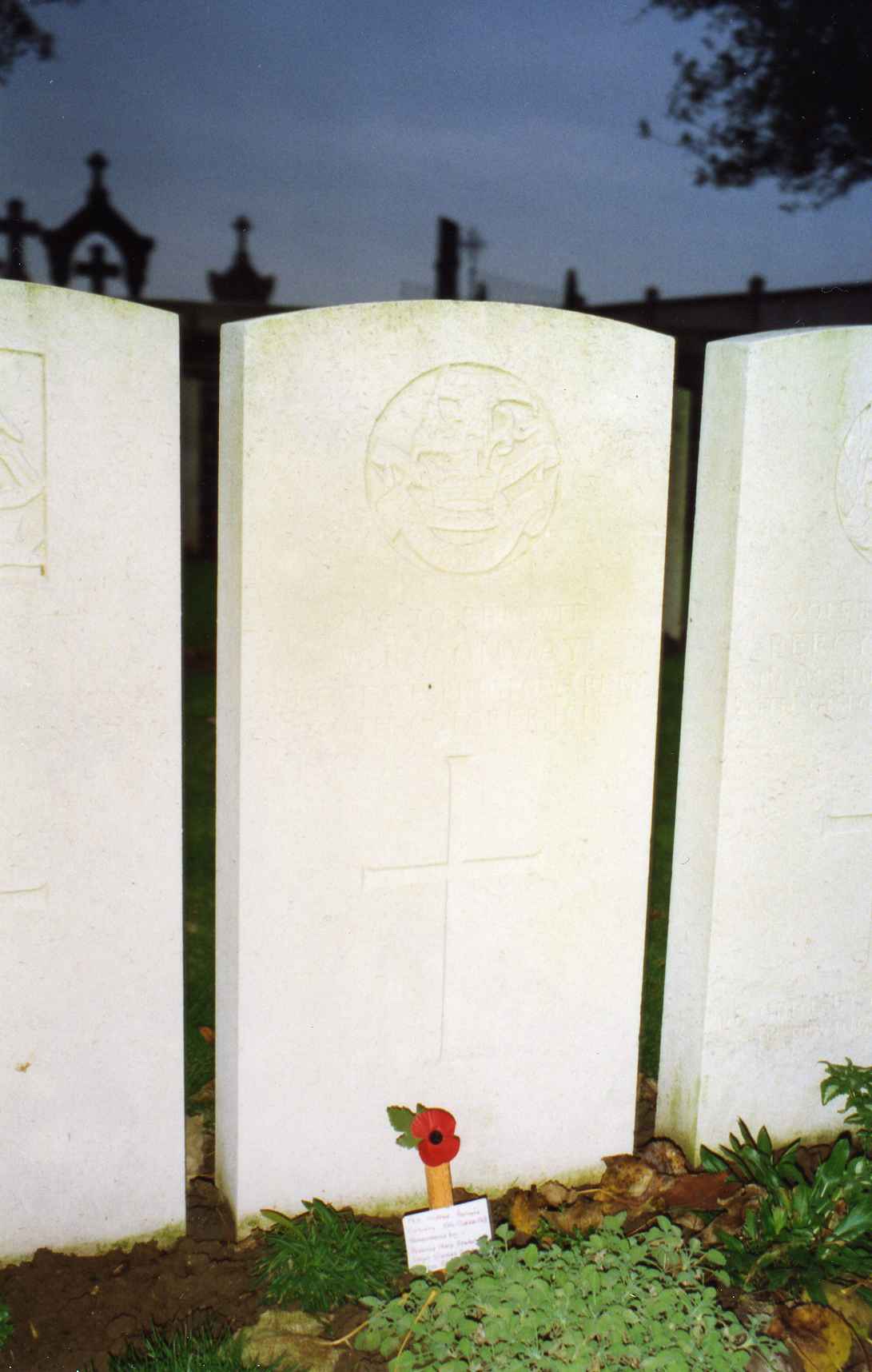
Grave of Wilfred Bernard Conway in Quievy Communal Cemetery Extension.
Wilfred Conway was born on 11th February 1898 at Tachbrook, Warwickshire and enlisted at Rugby. When his mother went to India he came to Wolston, Warwickshire to live with his Aunt, Mrs Agnes Reader and her husband Gerald at Warwick House, Warwick Road, Wolston now the site of Nos. 16, 18 and 20 Warwick Road Wolston.
The Battalion formed at Huddersfield in 1914 and went to France in January 1917: Private Conway almost certainly went with his Battalion to join the B.E.F.
On the 30th January 1918 the 2/5th Battalion of Duke of Wellington’s (West Riding Regiment) was absorbed into the 1/5th Battalion, becoming from that date the 5th Battalion.
The Battalion remained in 186th Brigade of the 62nd Division which was in VI Corps and part of the Third Army.
On the 21st March 1918 the German Army launched a massive offensive on the Western Front in a last desperate attempt to score a decisive victory. The results were spectacular. They advanced up to 40 miles, further by far than the British and French had managed in their offensives on the Somme, the Aisne and at Ypres. The British Fifth Army was crushed, and the Allies suffered 212,000 casualties. The French suffered a humiliating defeat at Chemin des Dames and plans were made for the evacuation of Paris. The British were seriously concerned that the French might sue for peace and were uncertain whether they could continue the struggle, and plans were drawn up for the evacuation of the British Army from France if Dunkirk, Calais or Boulogne fell. The German line before the offensive was about 20 miles East of Noyon, on the western edge of St Quentin, 15 miles East of Peronne, 20miles East of Bapaume, 7 miles East of Arras, 5 miles East of Armentieres, 25 miles East of Bailleul and 12 miles East of Ypres. Then the offensive gradually lost momentum, the French counterattacked in July, the British in August and the Germans finally lost the initiative. After the offensive the German Army had reached positions some 15 miles West of Noyon, 45 miles West of St. Quentin, 20 miles West of Peronne, 12 miles West of Bapaume, still 7 miles East of Arras, 28 miles West of Armentieres, 8 miles West of Bailleul and 4 miles East of Ypres.
The Counter-Attack in Champagne by mainly the French Army was from 20th July to 2nd August 1918.
On the 8th August 1918 the Allied forces launched the surprise attack that heralded the end of the First World War. With skill and daring 21 Divisions breached the German lines, supported by 500 tanks (the largest number to have been seen in any one battle of the war) and 1000 aircraft. In their wake they left 50,000 dead or wounded German soldiers along a stretch of 11 miles. On this “black day” for the Germans the Allied forces began to see a glimmer of hope and the dawn of victory that was to come only 100 days later with the Armistice on 11 November 1918. The Advance to Victory can be divided into 7 phases, The Advance in Picardy 8th August-3rd September, The Advance in Flanders 18th August-6th September, The Breaking of the Hindenburg Line 26th August-12th October, The Pursuit to the Selle 9th-12th October, The Final Advance – Flanders 28th September-11thNovember, The Final Advance – Artois 2nd October-11th November and The Final Advance – Picardy 17th October – 11th November 1918.
By the morning of the 10th October 1918 the British front line was in Third Army sector some 4 miles East of Cambrai with some elements to the south of the sector only about 4 miles West of La Cateau.
In VI Corps, in addition to the 62nd Division, were the Guards Division and the 2nd and 3rd Divisions. The 1st Battalion the Irish Guards continued the advance of the 1st Guards Brigade at 0500 on the 10th October and by the afternoon cleared the village of Quievy which was found to be in a tolerably good state of repair and contained supplies of hay and straw reaching their final objective the high ground north-east of Quievy about 2230.
The scene was thus set for the Battle of the Selle from the 17th to the 25th October 1918 part of the Final Advance – Picardy. On the 17th October General Headquarters issued a formal operation order . The Fourth, Third and First Armies with the French First Army co-operating, were to be ready to launch a general attack from the east bank of the Selle on or about the 21st instant with the object of securing the line Sambre canal – the western edge of the Forest of Mormal and northward to the Schelde.
The Fourth Army (to the South of the Third Army) had arrived at the Selle position which included the fortified town of Le Cateau on the 11th October. The German defences along the river were virtually nonexistent; a few trenches and some wire near Le Cateau. The river at this point was no more than a minor obstacle. At its broadest it was but 18 feet wide, to a depth of 3 – 4 feet However in its northern sector was Le Cateau a town of about 10,000 people with solidly built houses and cellars. To its east rose a railway embankment providing excellent cover for machine-guns and field artillery. Between the 11th and 17th October a heavy bombardment was opened on the German defences and the attack went in on Fourth Army front at 0520 on the 17th October: it was successful everywhere the line of the Selle River being forced and Le Cateau captured.
The VI Corps had a less simple task than the V and IV Corps in Third Army, for none of its troops were across the Selle. All the bridges in its sector had been destroyed, and although there was a ford at St. Python, the river was a serious obstacle, being about 20 feet wide and 4 to 6 feet deep, with banks in places about 10 feet above water level, whilst debris from the railway south of Solesmes had partially dammed the stream causing a flood extending for a 1000 yards to the south which practically prevented bridging in this reach. Solesmes was strongly defended in front and as it was full of French civilians the full barrage crept past the sides of the town whilst the barrage overhead was limited to shrapnel and machine-gun bullets which the inhabitants could avoid by going into their cellars. Corps objectives were the ridge to St Martin, after lines in front of and behind Solesmes itself. That of the 62nd Division was along the eastern edge of Solesmes and thence along the Solesmes – Vendigies road. The 86th Brigade was to capture Solesmes. The 2/4th York and Lancaster crossed the Selle river by bridges actually in the 42nd Division sector to take the southern part of the town and was on the eastern bank before zero. Also before zero the 2/4th Duke of Wellington’s operating north of the town took the railway on the western bank with scarcely any opposition and when the barrage lifted at 0200 the battalion continued to the western bank of the Selle River where it attracted considerable machine-gun fire from the other side. Before zero too a company of the 5/Duke of Wellington’ waded across at St Python unopposed and Royal Engineers having placed footbridges unobserved in the dark the rest of the Duke’s crossed without casualties and were also on the eastern bank by zero. After some hard fighting the companies pressed on reaching their first objective which in their case was the final one, the outskirts of Solesmes. The 5/Duke of Wellington’s were followed across by the 2/4th Hampshire and with the York and Lancaster from the south had by 0715 mopped up the town.
The 62nd Division that day gained all its objectives and 699 prisoners at a cost of 452 casualties.
Wilfred Conway was one of six Other Ranks serving with the 5/Duke of Wellington’s killed in action during the offensive, the others being Privates Ernest Edwin Carter, Ernest Franklin, George Henry Marwood, James Taylor and Willliam Benjamin Wood all buried with Private Conway in Quievy Communal Cemetery Extension. Private James William Snowden died of wounds on the 20th October and is buried a little nearer to Cambrai in Carnieres Communal Cemetery Extension.
The 2/4th Hampshire lost 7 Other Ranks killed in action on the 20th October, Privates George Callaway, Ivor Cyril Chedgy, William Morley, Thomas Moscrop, George Munday and Percival Simmonds all being buried in Quievy Communal Cemetery Extension whilst the seventh has no known grave, he being Private William Busby and he is commemorated on the Vis-en-Artois Memorial to the Missing who fell in the 1918 Advance and the Memorial is about 7 miles SE of Arras.
Wilfred Conway’s Platoon Commander wrote to his Aunt Mrs. Agnes Reader: “It was in the very early hours of the morning of the 20th that we started an attack against a village where severe hand to hand fighting ensued. It was in the main street that your nephew met his death by a piece of shell. I extend to you my very deepest sympathy and also that from his pals in the platoon which he ever kept lively and in good spirits. He fought and paid the supreme sacrifice, but not in vain, when this dark cloud lifts, there will be a day of reckoning for the fallen brave and pray God a world free of such a cruel enemy. I can assure you he was buried with all respects of a typical fighting Britisher.”
Wilfred Conway had been wounded earlier in 1918 and was admitted to No. 18 General Hospital, Dammes-Camiers (about 10 miles South of Boulogne) on the 27th August 1918 suffering from a severe gun shot wound to his left cheek. He was probably wounded on the 25th August during the Battle of Albert in an attack towards the Favreuil – Mory road, some 10 miles south-east of Arras.
Gerald Reader also fought in the War. He served with the 15th Battalion Royal Welch Fusiliers and was captured almost certainly on the 27th July 1917 just before the opening of the 3rd Battle of Ypres when his Company was carrying out a reconnaissance of the German lines to find out if they were occupied or not. 40 out of about 230 men in the Company were killed in action when the Germans opened a murderous fire. On the 15th September 1917 it was reported that he was a prisoner of war at Munster, Westphalia, Gemany. Gerald Reader was repatriated in 1918 and died in 1953.
Private Conway was awarded the British War and Victory Medals.
Walter Davis. In a Local Newspaper dated 15th January 1916 it was reported that Private Walter Davis had been killed in action in France. He had been out at the Front for several months. No definitive information as to date of death or military service has been established. Son of Emma Davis a widow, Walter Davis had been married at some time after 1911.
Joseph Philip Heywood Edmans Lance Corporal No 9779 5th Battalion Princess Charlotte of Wales’s (Royal Berkshire Regiment). Military Medal. Died of wounds in 3rd Canadian Hospital in Doullens on the 5th April 1918 aged 25 years. Buried in Doullens Communal Cemetery Extension No. 1, Doullens, Somme. Enlisted London, resident Wolston. Landed in France with the 1st Battalion Royal Berkshire Regiment on the 13th August 1914, having by then been in the Army for 4 years. During his Service, he was wounded 4 times and was transferred to the 5th Battalion, possibly after the Somme offensive in 1916. Lance Corporal Edmans was awarded the 1914 Star, the British War and Victory Medals.
Francis John Elliott Private No 3300 9th Battalion Royal Warwickshire Regiment. Killed in action, beong shot thrugh the heart, on 10th August 1915 aged 26 years. Commemorated on the Helles Memorial, Cape Helles, Gallipoli. Born Bubbenhall, enlisted Coventry, residence Wolston, son of Charles Elliott of Brook Street, Wolston. Private Elliott was awarded the 1914/15 Star and the British War and Victory Medals, he having landed at Gallipoli (Dardanelles) on the 13th July 1915.
William John Flowers Rifleman No S/2756 10th Battalion Rifle Brigade (The Prince Consort’s Own). Killed in action 3rd September 1916. Commemorated on the Thiepval Memorial, Somme. Born Wolston, enlisted Rugby, residence Wolston. Son of John and Lucy Flowers of Brook Street, Wolston. Rifleman Flowers was awarded the 1914/15 Star and the British War and Victory Medals, he having landed in France on the 22nd July 1915.
Frederick Howard Private No 15312 1st Battalion Worcestershire Regiment. Killed in action 13th March 1915. Commemorated on the Le Touret Memorial, Richebourg-L’Avoue, Pas –de- Calais. Born Wolston, enlisted Rugby, residence Wolston, the son of Frederick Howard, a widower by 1911. Private Howard was awarded the 1914/15 Star and the British War and Victory Medals.
Charles Howkins Private No 16900 “C” Company 10th Battalion Royal Warwickshire Regiment. Killed in action 18th November 1916 aged 22 years. Buried in Grandcourt Road Cemetery, Grandcourt, Somme. Born Stretton on Dunsmore, enlisted Coventry, residence Wolston, son of Thomas and Sarah Howkins, Sarah Howkins moving to School Street, Wolston after her husband had died. Private Charles Howkins was awarded the British War and Victory Medals.
William Frederick Hacket Huby Private No 202001 7th Reserve Battalion Royal Warwickshire Regiment. Died 7th October 1918 (Home Theatre). Buried Welford Road Cemetery, Leicester. Born Derby, enlisted Coventry, residence Bretford, son of William and the late Pauline Huby. Private Huby served overseas at some time after the 1st January 1916, probably with the Royal Warwickshire. He was subsequently posted to the 7th (Reserve) Battalion which, by the Summer of 1917, was in Northumberland. In about June 1918 he was admitted to a Temporary Military Hospital in Gosforth in Northumberland and remained in hospital until he died on the 7th October 1918, the cause of death beng certified as Myelitis (inflammation of the spinal cord)(Syphilitic). Private Huby was awarded the British War and Victory Medals.
Herbert Harold Kenney Private No 5224 1/6th Battalion Royal Warwickshire Regiment. Killed in action 4th February 1917. Commemorated on the Thiepval Memorial, Somme. Born Wolston, enlisted Rugby, residence Wolston, son of George and Elizabeth Kenney. Private Kenney was awarded the British War and Victory Medals.
John Charles Lixenfield Lance Corporal No 41457 Corps of Royal Engineers (H.Q. 9th Division Engineers). Died 13th May 1917 aged 22 years in a Hospital in Manchester(Home Theatre). The cause of death was a shrapnel wound to the head, hit just after he had finished dressing another of the wounded and being very good at ambulance work he had been assisting one of the military doctors. Buried Wolston Cemetery, Dyers Lane, Wolston. Born London, enlisted Coventry, residence London, eldest son of John and Ada Emily Lixenfield of School Street, Coventry. Lance Corporal Lixenfield was awarded the 1914/15 Stqar and the British War and Victory Medals, he having landed in France on the 12th May 1915.
Owen Watkin Wynn Hardinge Meredith Second Lieutenant Royal Flying Corps. Died of wounds 20th November 1917 aged 24 years. Buried in Vis-en-Artois British Cemetery, Haucourt, Pas-de-Calais. Only son of the late Venerable Archdeacon Thomas Meredith and Mrs. Mary Jane Meredith, Thomas Meredith being the Vicar in Wolston from 1908 until his sudden death on the 26th September 1916. Owen Meredith was born in Tibberton in Shropshire in 1893 and went to Harrow School and then Jesus College, Cambridge. On the 13th December 1915, whilst still an undergraduate, he joined the Inns of Court Officers Training Corps. On the 25th May 1916 he applied for appointment to the Special Reserve of Officers of the Royal Flying Corps being commissioned in the General List (RFC) on the 17th March 1917. Following flying training he became a flying officer on the 2nd July 1917 and was posted to 64 Squadron RFC which flew to France on the 14th October 1917, 2nd Lieutenant Meredith landing with his Squadron. Air Support for the offensive, Battle of Cambrai, was by a number of RFC squadrons, including 64 Squadron based at Le Hasmeau in the Somme area. At 6.30 a.m. the British 3rd Army launched its surprise attack on the German lines using tanks instead of a preliminary artillery barrage. 2nd Lieutenant Meredith's role in supporting the advance of tanks and infantry was to drop bombs on and shoot at infantry and any German guns he came across. There was low cloud and fog and all the machines from the Squadron became separated. In the area North of Bourlon Wood, he was attacking a German ballooon when he was shot in the head bya bullet from a Machine Gun on the groundand fell with his machine sustaining mortal wounds. His body was recovered by a German Field Ambulance unit and buried in the German Cemetery at Rumaucourt. After the Armistice, 27 British and Commonwealth burials were exhumed and taken to Vis-en-Artois Cemetery, including that of 2nd Lieutenant Meredith, who was awarded the British War and Victory Medals.
William Hubert Morris Private No 11096 2nd Battalion Oxfordshire and Buckinghamshire Light Infantry. Killed in action 25th September 1915 aged 18 years. Buried in Guards Cemetery, Windy Corner, Cuinchy, Pas-de-Calais. Born Wolston, enlisted Rugby, son of John and Miriam Morris of Marston Mill, Wolston. A scholar at Bablake School, Coventry, he joined the Oxfordshire and Buckinghamshire LIght Infantry soon after the outbreak of the War and landed in France on the 1st April 1915 when he was only 18. At that date soldiers were not supposed to serve overseas until the age of 19 years. Towards the end of April, reinforcements of 100 other ranks arrived for the 2nd Battalion and Private Morris was probably one of those. Private Morris was awarded the 1914/15 Star and the British War and Victory Medals.
George Ernest Owen Private No 2824 1st Battalion Royal Warwickshire Regiment. Killed in action 25th April 1915. Commemorated on the Menin Gate, Ypres, West Flanders. Born Wolston, enlisted Coventry, residence Wolston,son of Arthur and Annie Owen of Brook Street, Wolston. Private Owen was awarded the 1914/15 Star and the British War and Victory Medals, he having landed in France on the 3rd February 1915.
Louis Henry Page Corporal No 310258 Warwickshire Yeomanry/1st County of London Yeomanry (Middlesex Due of Cambridge’s Hussars). Died 19th October 1918 aged 32 years. Buried in Alexandria (Hadra) War Memorial Cemetery, Hadra, Alexandria, Egypt. Son of William and Mabel Page of Wolston, husband of Annie Page of 6 Smithford Street, Coventry. In 1911, Louis Page was living on hie own at 1 Foleshill Road, Coventry, trading as a Corn Merchant on his own account. He maried Annie Agar in early 1914. He joined a Territorial Force, serving as No. 1697 with the 1/1st Warwickshire Yeomanry, part of the 1st South Midland Brigade. On the 10th April 1915 763 horses and mules sailed on the transport ship "Wayfarer", the bulk of the mean and officers sailing on HMT Saturnia. The Wayfarer was struck by a torpedo 60 miles North West of the Scilly Isles but was taken in tow to Queenstown when 760 of the animals were safely landed, only 4 of the men on baord were casualties. HMT Saturnia arrived at Alexandria in Egypt on the 24th April 1915, Corporal Page landing with his Regiment. On the 14th August 1915 17 officers and 289 NCOs and other ranks from the Warwickshire Yeomanry, including Corporal Page, embarked on HMT "Arcania" for the Dardanelles. The Yeomanry, which was to fight as Infantry, landed at Suvla Bay in Gallipoli on the 18th August as part of the 2nd Mounted Division. The Warwickshire Yeomanry was engaged in the fighting on Gallipoli until the night of the 31st October 1915, when the troops went first to Mudros and then Alexandria, reached on the 28th November. It is likely that Corporal Page was one of the many sick from the Gallipoli Campaign and remained in Egypt (perhaps after evacuation from the Peninsula in a Hospital Ship) from October 1915 until October 1918, also transferring from the Warwickshire Yeomanry to the 1st County of London Yeomanry. He died on the 18th October 1918 from dysentery. The total of those killed or wounded from the British contingent was 70,775 but the non-battle casualties was twice that number. Corporal Page was awarded the 1914/15 Star and the British War and Victory Medals.
Thomas Powell Captain 8th Battalion Royal Irish Regiment D.C.M. Died 1st July 1918 in King George V Hospital Dublin. Cause of death (i) Duodenal Ulcer (ii) Haemorrhage. Buried Grangegorman Military Cemetery, Blackhorse Avenue, Dublin. His home was "Fernlea" in Wolston.
Thomas Powell was born in 1869. He served as No. 1801 Quartermaster Sergeant with the 6th Battalion the Royal Warwickshire Regiment in the South African War 1899-1902. This was a Militia Battalion. Thomas Powell was awarded the Distinguished Conduct Medal and was mentioned in Lord Robert's Despatch dated 4th September 1901. In 1898 the Royal Warwickshire Regiment was augmented by two additional Line Battalions, numbered as the 3rd and 4th, so the two Militia Battalions became the 5th and 6th Battalions of the Royal Warwickshire Regiment.
In the 1st World War Thomas Powell served first with the7th (Service) Battalion of the Oxfordshire and Buckinghamshire Light Infantry as Quartermaster. By January 1915, aged 46, he was commissioned and promoted to Lieutenant. The 7th Battalion landed at Boulogne on the 21st September1915, Lieutenant Powell landing with the Battalion. Whilst on active service he contracted symptoms of asthma and was back in England by the 22nd November 1915 where he remained, attending a number of Medical Boards until in March 1916 he was appointed Temporary Quarter Master in the 2nd Garrison Battalion Royal Irish Rifles, going to Dublin that month. In the Summer of 1916 he was promoted Temporary Captain and in February 1918 Adjutant. On the 18th April 1918, the 2nd Garrison Battalion went to France but Captian Powell being not fit for service overseas, from 1st May to 30th June 1918 was with the Railway Transport Organisation staff at Kingstown, when he was admitted to King George V Hospital where he died on the 1st July 1918 aged 49 years.
He was awarded the 1914/15 Star and the British War and Victory Medals.
Frederick John Francis Shepherd Private No. 21433 Royal Warwickshire Regiment (Depot). Died 17th January 1917 ( Home Theatre). Buried in Budbrooke Churchyard, Budbrooke, Warwickshire. Born Pillerton, enlisted Wolston. Son of Rose and Arthur Shepherd of Wolston. Private Shepherd died from a severe attack of bronchitis, when complications had set in. He never had the opportunity to serve overseas.
Harry Smith Sapper No 41455 Corps of Royal Engineers (54th Field Company). Died 7th November 1918 aged 25 years, the cause of death being Pneumonia. Buried Staglieno Cemetery, Genoa, a seaport on the Ligurian Sea in the North West of Italy. Son of George and the late Elizabeth Smith, who lived in Priory Row Wolston. Sapper Smith landed in France on the 12th May 1915 to join the 54th Company, which was attached throughout the War to the 7th Infantry Division. The Division fought in the Battles of Loos (September 1915), the Somme (July to November 1916) and 3rd Battle of Ypres (July to November 1917). In October 1917 the Austrians with German Divisions overwhelmed the Italians at Caporetta and 6 French and 5 British Divisions were sent to Italy, the 7th Division being one. Battle casualties were comparatively few so the greater part of the work of the medical services was connected with sickness. The weekly wastage from sickness was never excessive until October and November 1918 when it increased to an alarming extent on account of the influenza pandemic (Spanish Flu). It is most likely that Sapper Smith was one of the estimated 43,000 servicemen who died in the influenza pandemic.
Sapper Smith was awarded the 1914/15 Star and the British War and Victory Medals.
Robert Wells Lance Corporal No 15317 1st Battalion Worcestershire Regiment. Killed in action 1st August 1917 aged 24 years. Buried in Hooge Crater Cemetery, Zillebeke, West Flanders. Born Coventry, enlisted Rugby, residence Coventry, in 1911 he was living with his parents Henry and Mary Ann Wells in Rugby Road, Wolston. The Battalion landed in France on the 6th November 1914 in 24th Brigade of the 8th Division, Private Wells joining the Battalion in January 1915. He was wounded in June 1915 but was ready for the Battle of the Somme (July to November 1916). From March to the end of May 1917 the Division was involved in the pursuit of the Germans in their retreat to the Hindenburg Line but was next ordered North to take part in the 3rd Battle of Ypres. The attack began on the 31st July 1917 with the 24th Brigade on the right astride the Ypres-Menin Road with Bellewarde Lake, Hooge and Chateau Wood in front. The Battalion was on the right of the Brigade and in that sector a small advance had been made, which they managed to hold the next day. In that action, Robert Wells was killed. Lance Corporal Wells was awarded the 1914/15 Star and the British War and Victory Medals.
Charles Woodings Lance Sergeant No 9903 8th Battalion Prince of Wales’s (North Staffordshire Regiment). Killed in action about 6th July 1916. Commemorated on the Thiepval Memorial, Somme. He was born in the Summer of 1880 in Burton on Trent, son of Charles Woodlings (a grocer) and Eliza Woodings. He served in the Regular Army, both in India and South Africa, but in 1911 was living in Brook Street, Wolston. On the 23rd December 1911 he married Florence Kirby. When war was declared he volunteered and enlisted in Coventry although he had by then completed his time on the Reserve List. The 8th Battalion was part of 57th Brigade, 19th Division, landing in France mid July 1915. The Division moved south to the Somme sector on the 10th May 1916. The Battle of the Somme began on the 1st July 1916. At 3 a.m. on the 3rd July, the Battalion attacked the northern portion of La Boisselle but by the evening, the whole of the village was still not in British hands. Another attack was made on the 4th July and later that day the Battalion was relieved and went back to Albert in the evening of the 5th July 1916. Whilst CWGC gives the date of death as 6th July, when the Battalion was in billets, the date has been changed to "about 6th July 1916." Lance Sergeant Woodings was awarded the British War and Victory Medals.
George Chapman Yeomans Corporal No 242671 1/6th Battalion Royal Warwickshire Regiment. Killed in action 27th August 1917 aged 33 years. Commemorated on Tyne Cot Memorial to the Missing, Tyne Cot Cemetery, Passchendaele, West Flanders. Born 1885, son of Joseph and Charlotte Yeomans, of Shadbolt Street, Birmingham. By 1911 he was living In Wolston. The Battalion landed in France on the 22nd March 1915 and on the 13th May 1915 became part of 143rd Brigade, 48th Division. Corporal Yeomans did not join his Battalion until after January 1916. On the 5th July 1917 the 48th Division transferred to XVIII Corps in preparation for a move to the Ypres Salient and the 3rd Battle of Ypres. The Battalion arrived in the Salient on the 23rd July 1917. On the 27th August, zero hour was 1.55 p.m. and the Battalion was attacking the enemy positions at Winnipeg Farm and cemetery, to the East of St. Julian. 25 other ranks were killed in this attack, one of whom was Corporal Yeomans. Corporal Yeomans was awarded the British War and Victory Medals.
Those who laid down their lives in the Second World War 1939 - 1945 and recorded on the War Memorial in Wolston
Denys Addison Leading Airman No. FAA/FX.512249 Royal Navy died 5th December 1944 aged 21 years. Commemorated on the Lee-on-Solent Memorial. Son of Humphrey Reginald and Mary Addison of Church Lawford, Warwickshire. He served at HMS Urley which became the Royal Naval Service Training Base from June 1944. Used primarily for training of aircrew, the Memorial at Lee-on-Solent being for Fleet Air Arm personnel with no known grave suggests he was involved in a flying training exercise.
Dick Mitchell Fear No 1578542 Sergeant Royal Air Force Volunteer Reserve died 9th June 1943 aged 20 years. Buried Coventry (Canley) Crematorium.
William Lucas Suggested his parents lived at Marston Hall Farm, Priory Road, Wolston and that he served in the Royal Air Force but no definitive information available.
John William Oldfield No P/JX 405756 Telegraphist Royal Navy. Croix de Guerre. Died 15th March 1945 aged 20 years. Buried in Hyeres New Communal Cemetery. Son of William and Fanny Oldfield of Wolston. Served on H.M.S. Emile Bertin, immobilised by French Vichy authorities in May 1942 but under French colours in June 1943 joined the Allied invasion of Southern France which began in August 1944. By October 1945 the ship was back in Toulon for re-fitting. The Cemetery is near Hyeres, in the Var Department in SE France, with only one other casualty died 4th May 1917 which suggests John Oldfield was linked in some way to Operation Dragoon, invasion of Southern France.
Afghanistan
Phillip Wayne Newman Colour Sergeant 4t/h Battalion Mercian Regiment died in an accident in Helmand Province, Southern Afghanistan on the 20th September 2007 aged 36 years and is buried in Dyers Lane Cemetery, Wolston. A married man with 3 children. With a Private Tunnicliffe from the same Battalion and another individual, Sergeant Newman was travelling in a 4 wheel drive Military Utility Vehicle in an essential re-supply mission, which overturned and landed in an irrigation ditch. Of the three, both Sergeant Newman and Private Tunnicliffe died from injuries. |